Darsan — Explore Temples
Discover the sacred temples of Nabadwip Dham. Each temple carries centuries of devotion, culture, and spiritual significance.
Showing 22 of 22 temples

Bhabataran Mahadev (Shiv) Temple
A rare octagonal-peak Shiva temple at Poramatala, restored in 1825 by Raja Girish Chandra after the original 17th-century shrine was lost to a Ganges flood in 1760.

Bhavatarini Mata Mandir, Poramatala
Established in 1825 by Raja Girish Chandra, this Char-Chala-style Kali temple at Poramatala is one of Nabadwip’s most revered shakti shrines. The deity was originally carved from a 100-year-old Ganesha idol salvaged from the Ganges.
Boral Ghat
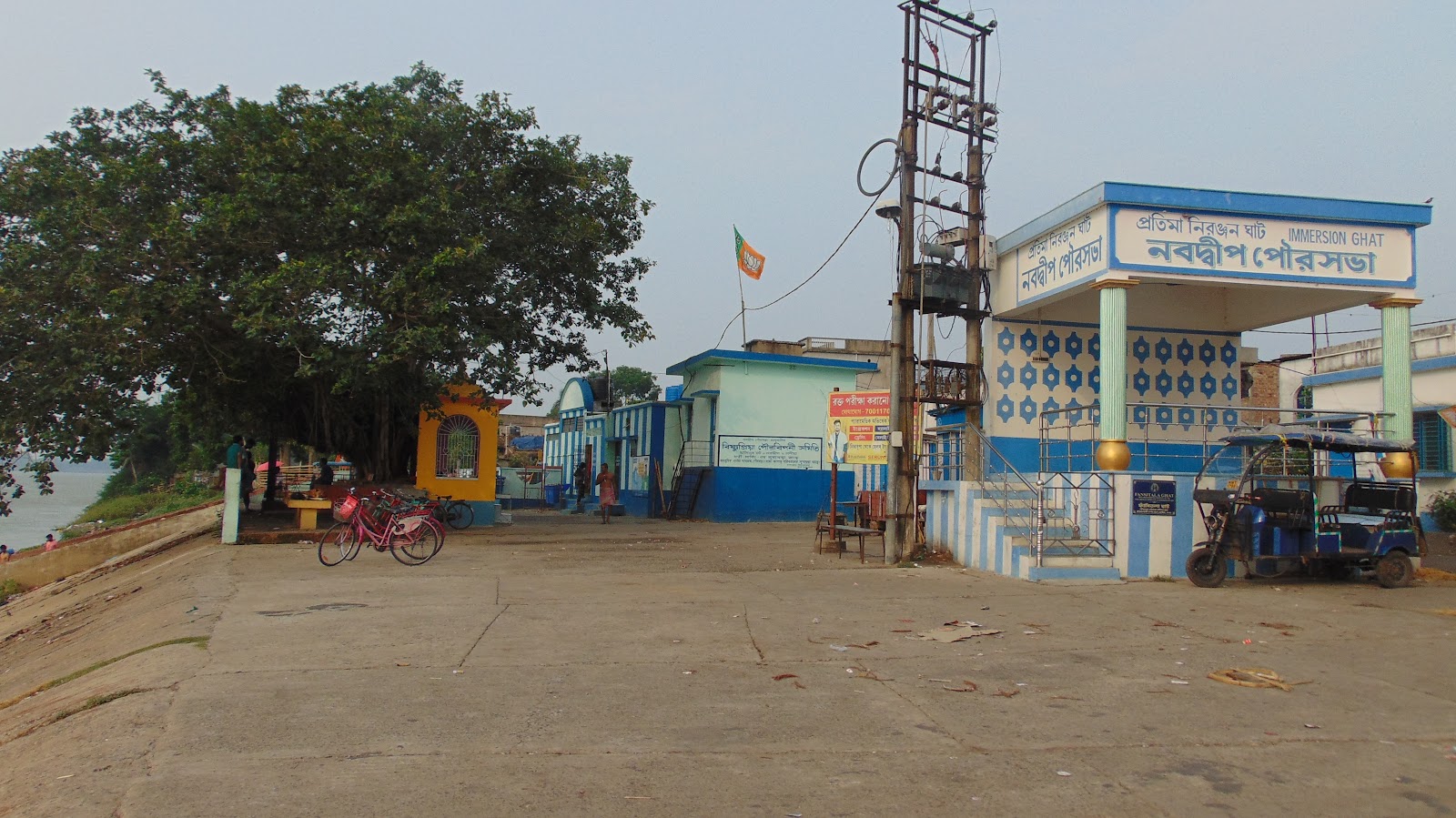
A quieter, traditional ghat on the western bank near Poramatala, popular with local pilgrims for early morning bathing and as a launch point for small country boats heading downstream.

Dhameshwar Mahaprabhu Temple
A short walk from Poramatala, this temple preserves the original wooden footwear (paduka) of Sri Chaitanya Mahaprabhu in a silver casket. Pandits offer the paduka-blessing on the head of devotees during morning hours.

Dwadas Shiva Mandir
Built in 1835, this twelve-Shiva-lingam temple complex is admired for its exquisite floral terracotta work and draws a steady flow of pilgrims through the year, especially during Shravan.

ISKCON Chandrodaya Mandir
The ISKCON Chandrodaya Mandir in Mayapur is one of the world's largest temple complexes, dedicated to Sri Sri Radha Madhava and the Pancha Tattva. The stunning architecture and vast spiritual campus attract millions of pilgrims annually. The Temple of the Vedic Planetarium (TOVP), currently under construction within the campus, is set to become the world's tallest Hindu temple.

ISKCON Mayapur — Chandrodaya Mandir
The world headquarters of the International Society for Krishna Consciousness, founded by Srila Prabhupada. Home to the Radha-Madhava and Pancha-Tattva deities, daily aarti, kirtan, prasadam halls and guesthouses for visiting pilgrims.

Jalangi Ghat — Sunrise Aarti
The Jalangi Ghat is the sacred riverside bathing ghat where the Jalangi River meets the spiritual heart of Nabadwip. Every morning at sunrise, priests perform aarti on the river as devotees take a holy dip. Boats depart from here for the famous Nabadwip Dham river parikrama. The ghat comes alive during festivals with thousands of oil lamps floating on the water.

Maa Porama Mandir
Centuries-old shrine of Goddess Porama (a form of Maa Kali) standing under an ancient banyan tree. Local legend tells of a fire that swept the city until the wind from this very banyan extinguished it — the place has been called "Poramatala" ever since.

Madan Mohan Temple
The Madan Mohan Temple is one of the oldest and most revered temples in Nabadwip. It enshrines the beautiful deity of Madan Mohan (Krishna as the enchanter of Cupid) and Radharani. This temple is an important stop on the Nabadwip Dham parikrama (circumambulation) route, attracting thousands of pilgrims during Gaura Purnima.

Mayapur Ghat — Ganga & Jalangi Sangam
The sacred confluence of the Ganga and Jalangi rivers at Mayapur — visible from the riverside and considered the most auspicious bathing point in the Nabadwip mandala.

Nabadwip Ganga Ghat
The principal bathing ghat of Nabadwip on the Ganges, alive at dawn with snan, daily puja and at dusk with the riverside aarti. Boats depart from here to Mayapur and to the Ganga–Jalangi sangam.

Nabadwip Jal Mandir
1. শান্ত পরিবেশে অবস্থিত অনন্য মন্দির : নবদ্বীপের গঙ্গার ধারে অবস্থিত এই জল মন্দিরটি চারপাশে জলে ঘেরা, যা একে অন্যসব মন্দির থেকে আলাদা করে তোলে। 2. জলের মাঝখানে নির্মাণ (Floating Style Structure) : মন্দিরটি এমনভাবে তৈরি যে মনে হয় এটি জলের উপর ভাসছে। একটি সরু পথ বা ব্রিজ দিয়ে মন্দিরে পৌঁছাতে হয়। 3. ইতিহাস ও স্থানীয় বিশ্বাস : এই মন্দিরের সঠিক প্রাচীন ইতিহাস খুব স্পষ্টভাবে লিপিবদ্ধ না থাকলেও, স্থানীয়দের মতে এটি বহু বছর আগে ধর্মীয় উদ্দেশ্যে নির্মিত এবং ধীরে ধীরে একটি জনপ্রিয় তীর্থস্থান হয়ে ওঠে। 4. হিন্দু ধর্মীয় গুরুত্ব : এখানে বিভিন্ন হিন্দু দেবদেবীর পূজা করা হয় এবং বিশেষ দিনে ভক্তদের ভিড় লক্ষ্য করা যায়। 5. নবদ্বীপের আধ্যাত্মিক পরিবেশের অংশ : Nabadwip নিজেই একটি গুরুত্বপূর্ণ ধর্মীয় কেন্দ্র, বিশেষ করে ভগবান চৈতন্য মহাপ্রভুর জন্য বিখ্যাত, তাই জল মন্দির সেই আধ্যাত্মিক আবহেরই একটি অংশ।


Radha Binod Temple
One of the most beautifully decorated temples in Nabadwip Dham, the Radha Binod Temple features ornate terracotta architecture and houses the enchanting deities of Radha and Binod (Krishna). The temple is especially magnificent during evening aarti when hundreds of lamps illuminate the shrine.

Sonar Gauranga Mandir
Famed for its golden deity of Sri Chaitanya Mahaprabhu and a glass case enshrining what is believed to be his sacred footprint. Located opposite Samajbari Ashram and beside Srivasa Angan.

Sri Chaitanya Saraswat Math (Jaler Mandir)
Established in 1941 by Srila Bhakti Rakshak Sridhar Maharaj. Known affectionately as "Jaler Mandir" (the water temple) for the central shrine surrounded by a pond. The complex includes the Gourikunda, a small museum and a deer park.

Srivasa Angan
The home of Srivasa Pandita where Sri Chaitanya Mahaprabhu and his associates gathered every evening for ecstatic kirtan and Harinam sankirtana — the very birthplace of public Gaudiya kirtan.

Srivasa Angan
Srivasa Angan is the courtyard of Srivasa Thakur, where Sri Chaitanya Mahaprabhu and His associates performed sankirtan (congregational chanting) every night. This is considered one of the holiest spots in Nabadwip — the birthplace of the Hare Krishna movement's kirtan tradition. The beautiful temple preserves the original atmosphere of Mahaprabhu's pastimes.

Temple of the Vedic Planetarium (TOVP)
A monumental temple rising 350 feet beside the ISKCON Chandrodaya Mandir — once complete it will be among the largest temples in the world and host an interactive Vedic cosmology exhibit envisioned by Srila Prabhupada.

Yogapith — Sri Chaitanya Janmasthan
The birthplace of Sri Chaitanya Mahaprabhu (1486 CE). The white ornate shrine with a pyramidal dome was established at this site by Bhaktivinoda Thakur in the 1880s and remains one of the holiest spots in Gaudiya Vaishnavism.